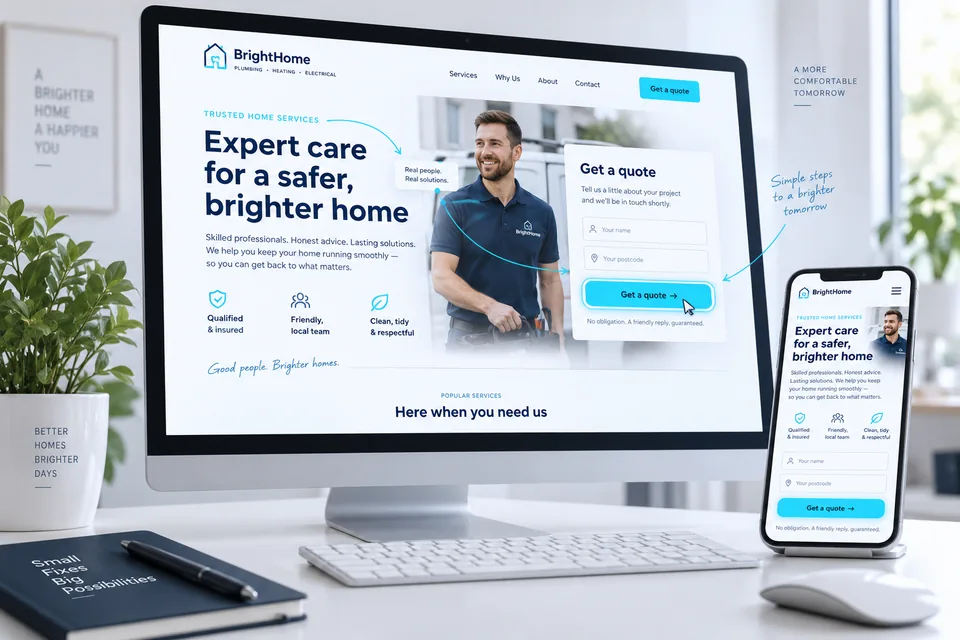
A landing page centers on an offer and primary action: an estimate request, consultation, registration or purchase. It helps visitors assess fit and move forward confidently. Our landing page planning connects the traffic source, message and information your team needs for follow-up. Before choosing colors or a platform, define the decision you want to make easier.
Success is more than form volume. A good page attracts suitable inquiries and prepares both sides for a useful conversation.
Landing page, website or service page?
A business website usually presents the company, services, team and expertise broadly. A landing page organizes content around one context. A service page can serve both purposes if it answers a specific need and offers a clear inquiry path. Its role matters more than its label.
An ad for post-renovation cleaning should lead to that service's scope, questions and estimate process. A general list of company services forces visitors to find the continuation themselves. Focus removes that effort while retaining information needed to choose.
| Page type | Primary purpose | Best suited to |
|---|---|---|
| Home page | Introduce the business and its range of options | Visitors arriving with different needs |
| Service page | Explain a specific service in depth | Answering questions and demonstrating expertise |
| Campaign landing page | Connect a specific offer to an action | A focused audience and offer |
One page.
A clear purpose.
- What are you offering me?
The service, benefit and fit
- Why should I trust you?
Clear explanation and relevant evidence
- How do I move forward?
A clear action and known next step
Define business success before design
“More leads” is a start, not a complete brief. Define the service, geography, customer fit and workable inquiry criteria. A company serving large projects may prefer fewer appropriately scoped leads to many irrelevant requests.
- Choose one main service or offer for the first version.
- Record what visitors already know and what they still need.
- Define the action and the person receiving the inquiry.
- Agree on qualification criteria and what sales records.
Operational capacity belongs in the brief. Explain actual response availability and any assessment required before quoting. A promise your business can fulfill builds trust before the first call.
What should a landing page include?
Answer questions in a logical sequence: introduce the offer, explain deliverables, show evidence, address concerns and invite contact. Repeat calls to action on long pages after information that gives people a reason to proceed.
- A main headline identifying the service and central benefit.
- A short explanation of the audience, scope or service area.
- An image that credibly illustrates the service or outcome.
- Specific benefits and an explanation of your approach.
- Testimonials, examples or projects authorized for publication.
- Answers to recurring questions and a form with clear follow-up expectations.
There is no universal section count. Expensive or complex decisions may need more detail than familiar, urgent services. Add content when it answers a question; retain information that clarifies limits, supports comparison or builds confidence.
Turn the structure into a work plan with our landing page launch guide, covering materials, approvals and handoff checks.
If the scope of your online presence is unclear, our landing page versus business website comparison separates focused campaigns from ongoing content needs.
 Design & hierarchy
Color, spacing, imagery and typography create a hierarchy that guides attention to what matters.
Turn a generic offer into a clear message
“Quality,” “service” and “professionalism” alone do not explain your difference. Describe a real capability or approach and its value to the customer. Explaining the discovery call is more useful than claiming uncompromising service.
Complete “We help ___ achieve ___ through ___.” Replace generic adjectives with explainable or provable details. If that is difficult, explore your business's strengths and differentiation before design.
The profession changes the explanation too. A lawyer's landing page begins with the practice area and prospective client's questions. A remodeling contractor's page also needs project types and scope.
Build trust with relevant evidence
Good evidence addresses a customer concern. Home-service buyers may want similar work and scheduling details. Professional-service buyers may care about process, deliverables and the team. Choose proof for the question, not simply its visual appeal.
Preserve testimonial wording and context, identify people only with permission and avoid turning one experience into a universal promise. Label illustrations appropriately. Accurate contact details and clear processes also build confidence when your review library is still small.
 Portfolio & proof
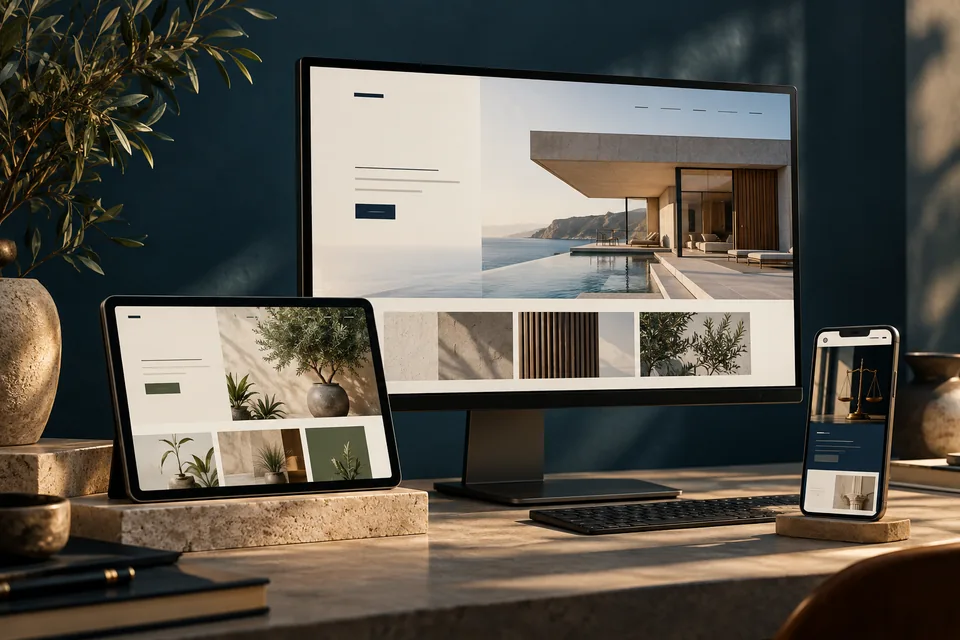
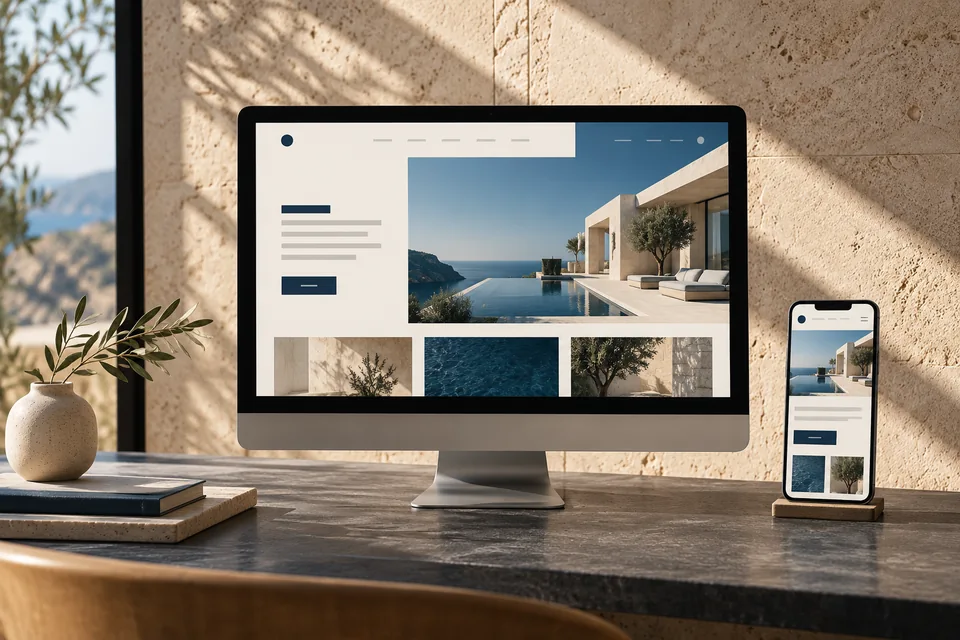
A real business should show its own work, explain what was delivered and highlight relevant details. This image illustrates one way to present a portfolio.
Plan the form and what follows
Every field needs a purpose. A name and number may support an initial call; service and city can filter unsuitable requests. Budget, urgency and scope questions help only if they change follow-up. Mark optional fields and explain less obvious requests.
The button should describe the next step, such as “Request a discovery call.” Confirm receipt clearly. Connecting the form to lead management can pass service and context so the conversation does not start from zero.
Offer phone contact when it fits the service. Both routes should serve the same goal and have follow-up ownership. A phone-link click indicates use, not a completed call or sale.
 Mobile forms
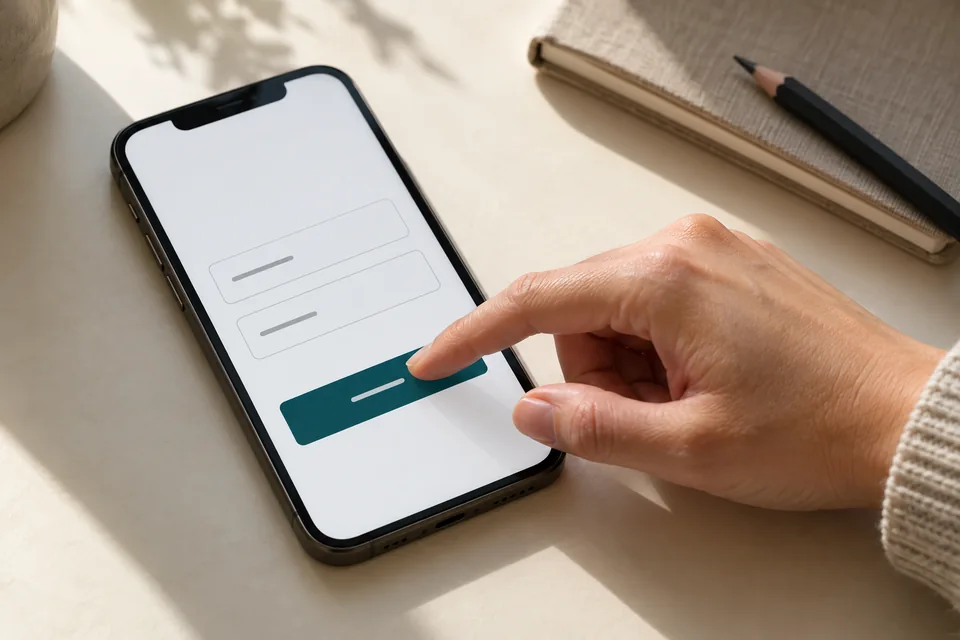
Start with the information needed for the next conversation. Mark optional fields, explain what happens after submission and make buttons easy to tap.
What to check before sending traffic
Follow the complete customer path: open the ad link, read the first screen, scroll on a phone and send a controlled test. Confirm correct field mapping and consistency between the visitor's message and the business's actual receipt.
- Messaging matches the incoming ad or link.
- Headlines, images and forms remain readable on small screens.
- Errors explain corrections without losing entered information.
- Links, phone actions and confirmations have been tested.
- Measurement distinguishes visits, clicks and accepted inquiries.
- The page has a consistent URL and relevant title and description.
If inquiries are weak, do not automatically change the button color. Check traffic quality, messaging, form reliability and follow-up. Why landing pages don't convert provides a structured diagnosis.
 Development & infrastructure
Behind the experience are the code, integrations and tests that keep a page working over time.
What to bring to a landing page planning session
Gather service descriptions, recurring questions, publishable assets and existing campaign details. You do not need a finished design idea. Salespeople's explanations of why customers proceed or hesitate are especially valuable.
Ask proposals to define writing, design, development, integrations, revision rounds and handoff. Explore our business landing page planning options. If your brief is ready, our design and development guides cover the next stages.
Questions about landing pages
Does every business need a landing page?
Not a separate page for every activity. A focused offer and audience can benefit from one. If an existing service page already answers the need and supports contact well, improve that first.
How much does a landing page cost?
Cost depends on strategy, content, design, variations and integrations. Compare deliverables, responsibilities and maintenance, and clarify hosting, licenses, domains and campaign management separately.
Does a longer page convert better than a shorter one?
Length should fit the decision. Include information answering real questions and make it scannable. Evaluate behavior and inquiry quality for the same offer and comparable traffic.
From reading to project planning
Once the goal is clear, define materials, scope, approvals and testing. Our landing page guide from brief to handoff helps prepare deliverables. Explore examples and fit on our service page.
Images in this guide were created with AI for illustration. They do not depict actual clients, team members or campaign results.