

An in-platform lead form can shorten the path to submitting details. A landing page provides more room for explanations, demonstrations and journey choices. Neither always wins. Choose based on what customers need to understand and how your team follows up.
Understand the difference in user experience
Meta lead forms let people submit details without leaving the platform. A landing page provides a separate experience for explaining the offer, showing images and structuring questions. This is a difference in journey and content control—not proof that one always attracts more serious prospects.
See Meta's lead generation guide for an overview. Available features can vary by account and update. Base the business decision on customer needs and verify technical options in your account before setup.
 Launches & products
Show the product and how it is used, clearly distinguishing existing features from planned ones.
When can an in-platform form work well?
When the offer is simple and the ad provides enough information, an instant form can be convenient. Examples include requesting a specific catalog or a callback about a straightforward service. The form should restate the request and who will respond so the inquiry stays connected to the brand and purpose.
Questions should support follow-up, not create artificial friction. A service-area question is useful if it determines who handles the inquiry. Information with no practical role adds effort without improving quality. Verify that leads reach the team's working system promptly.
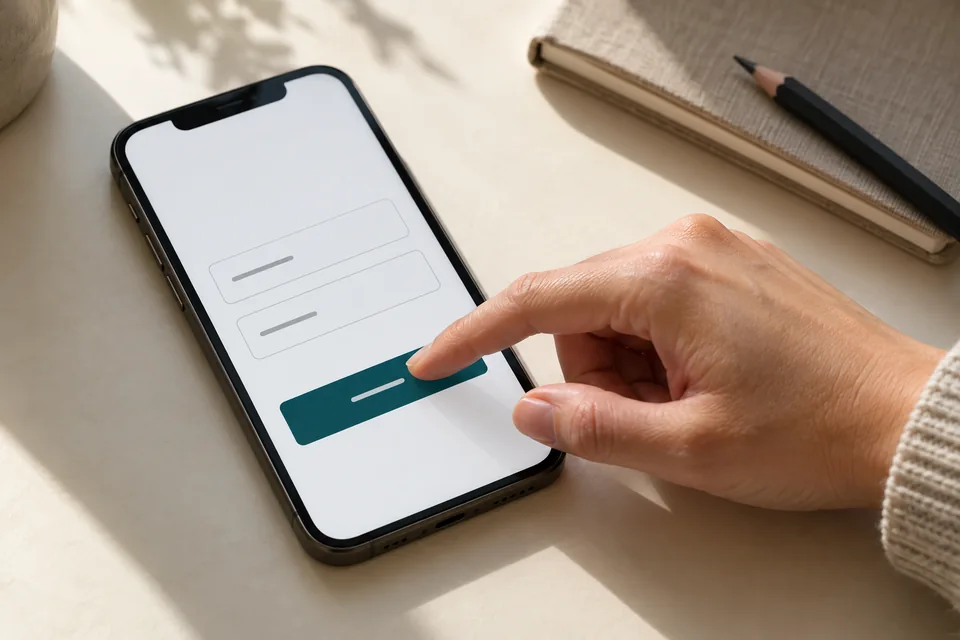 Mobile forms
Start with the information needed for the next conversation. Mark optional fields, explain what happens after submission and make buttons easy to tap.
When does a dedicated page add value?
A landing page gives space for process explanations, package comparisons, portfolios and terms. It also supports actions beyond contact details, such as purchases or service selection. Test loading and usability inside the app's browser, especially on mobile.
A prospective student may need a lesson sample and curriculum before deciding. An online course landing page can provide both. A practice can introduce its team and inquiry process, as explained in our medical practice landing page guide.
 Medical practices & patient reception
Your environment and reception process can reduce uncertainty. A practice website should show its actual space and team.
How much explanation is needed before contact?
Use these scenarios to plan a test, not predict which platform will win.
A clear offer. A shorter path to test.
Try an in-platform form with relevant questions and reliable handoff to the team.
Understand the process before reaching out.
A dedicated page can show stages, completed work and answers to concerns.
The customer needs to understand and buy.
Build a complete purchase flow with product details, terms and payment confirmation.
Illustrative scenarios. Adapt them to your business's actual offer.
Choose based on the explanation customers need
Do not decide solely on presumed friction from leaving an app or assumed qualification from an external page. Either route can be clear or confusing. Ask what the reader needs to know before submitting and where it can be explained without overload.
Different audiences may warrant different journeys, but their raw results are not directly comparable. People familiar with your brand differ from first-time prospects. Start with a focused test instead of changing every campaign at once.
Scroll horizontally to compare
| Consideration | Meta instant form | Landing page |
|---|---|---|
| Simple offer | Explain it in the ad and form | Possible; test whether extra detail helps |
| Need for demonstrations and content | More reliance on creative and form structure | Room for a sequence of explanations and examples |
| Sales handoff | Requires reliable lead transfer | Requires a reliable form and integration |
| Quality assessment | Track what happens after submission | Track what happens after submission |
Define quality before comparing costs
Agree on qualification with the team: relevant service, covered area, a need you can solve and contactability. Keep “not yet contacted” separate. Otherwise, delayed follow-up may be misdiagnosed as poor campaign quality.
Illustrative example in ILS: route A costs 1,200 and generates 40 inquiries, eight qualified; route B costs the same and produces 20 inquiries, ten qualified. Cost per qualified lead is ILS 150 versus ILS 120. This illustrates why cost per submission does not tell the whole story.
Carry context into the follow-up
The person following up should know the offer, requested service and submission time. Start with that context. Assign lead ownership, define after-hours handling and prevent multiple staff members contacting the same person at once.
For some businesses, WhatsApp fits both the audience and workflow. Our WhatsApp landing page guide explains how to open a clear conversation. Respect the expectations and choices established at submission; do not enroll people in unrelated message sequences.
 Inquiries & follow-up
Connect each inquiry to its source, assign follow-up ownership and track qualification and the next conversation.
Compare alternatives without misleading conclusions
Ask one question: does additional explanation improve qualification, or does a shorter path suit the offer better? Compare the same product, audience and follow-up window where possible, documenting unavoidable differences. Allow every inquiry time to receive a response before judging results.
Our conversion optimization guide explains hypothesis-led testing. Keep monitoring as offers and audiences change. A route that works for a short event may not suit a project with a long sales cycle.
 Measurement & conversion
Separate visits, actions and qualified inquiries to identify what really needs improvement.
Plan the campaign and page together
Bring the ad, service, recurring questions and follow-up workflow to the planning session. Search traffic has a different context from social discovery: our Google Ads landing page guide focuses on people who have already expressed a need through search.
Our landing page service identifies where explanation is needed and which journey fits the offer. An external page is a tool, not a performance guarantee. Build for meaningful measurement, easy reading and follow-up that meets expectations.
Ready for the next step?
Check off what you already have. This checklist stays on this page; selections are not submitted or saved after a refresh.
Common questions
Do instant forms always produce lower-quality leads?
No. Quality depends on the offer, questions, audience and follow-up. Judge actual progress, not where the form opens.
Can we use both approaches?
Yes, with a clear purpose and measurement for each. Keep different audiences and offers separate in analysis.
Should inquiries go straight to the CRM?
Plan a reliable, accessible handoff. Response speed and after-hours handling should match your capacity and the expectation you set.
Images in this guide were created with AI for illustration. They do not depict actual clients, team members or campaign results.